




Motley Fool Funds
Print this page

Fool Funds Semiannual Conference Call, Sept. 2012

Our Semiannual Conference Call 9/25/2012
10/10/2012

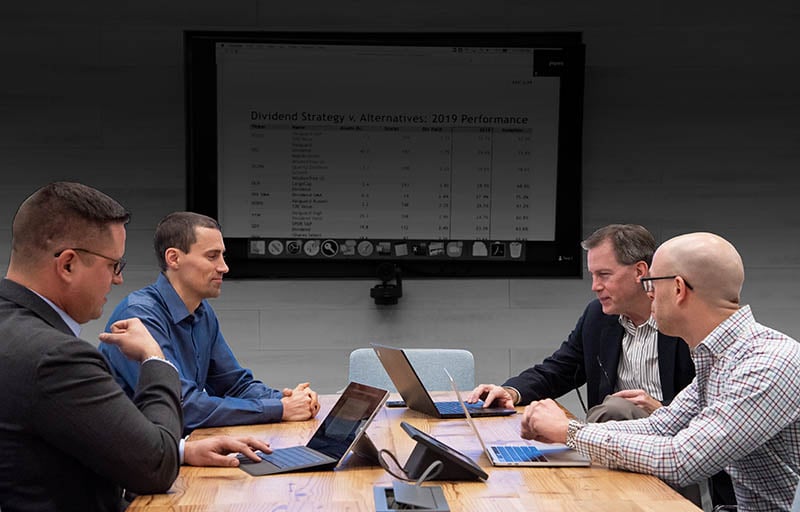
Chris Hill:       This is the one part of Worldwide Invest Better Day the future’s not only live video streaming, but also a conference call as well, and at this point I’d like to say good evening and welcome to The Motley Fool Asset Management semi-annual conference call. I’m Chris Hill, host of The Motley Fool’s weekly radio show, and joining me in-studio for tonight’s call are the members of The Motley Fool Asset Management Investment Team, Bill Mann, portfolio manager.

Bill Mann:      Hey, Chris. 

Chris Hill:       Senior Analyst for Equity Research, Don Krueger.

Don Krueger: How are you?

Chris Hill:       Bill Barker.

Bill Barker:    Chris.

Chris Hill:       Tim Hanson.

Tim Hanson:   Yo.

Chris Hill:       And Tony Arsta.

Tony Arsta:    Hello.

Chris Hill:       We are going to look back over the last six months.  We’re going to take your questions.  You can email them.  The email address is askbill@foolfunds.com, but first, a little bit of housekeeping to take care of, and of course, the disclosure.  So I guess if you need to go to the bathroom or get a bite to eat in the next 60 to 90 seconds, now would be the time to do so as I read, for legal purposes, the official disclosure.  

All of the following performance figures are as of the end of the most recent quarter, which was June 30th, 2012.  The Motley Fool Independence Fund lost 3.34% for the one-year period ending June 30th, and as of the same date, had an annualized return of 15.61% since the fund commenced operations on June 16th, 2009.  For the one-year period ending June 30th, the Great America Fund had a return of 0.91%.  Since its inception on November 1st, 2010, Great America has returned an annualized 9.84%.  And our newest fund, Epic Voyage, lost 5.5% from its inception on November 1st, 2011, to the end of the most recent quarter. 

Of course these figures represent past performance, and as the recent volatility in the market reminds us, investment success in the past does not guarantee continued success in the future.  On the FoolFunds.com website, you can always find returns for the funds updated to the latest month end. 

During the course of our call today, we may be talking about particular companies, securities and investment strategies.  Do not take this as personalized investment advice.  We are not trying to recommend that you buy, sell or hold any of the companies we discuss today, nor are we advocating an investment strategy for any of you as individuals.  You can find our funds’ top 11 holdings on our website.  These lists are updated quarterly, but keep in mind that the current holdings are subject to change at any time. 

One last thing to mention to keep our compliance people happy, as you surely must know, all investing, including mutual fund investing, involves risk and possible loss of principle.  For those of you in the audience today who are not shareholders of the funds, you should consider the fund’s investment objectives, risks and expenses carefully before investing.  A prospectus with this and other information is available at the FoolFunds.com website.  Please, please, please read the prospectus carefully before investing for a lot of reasons, not the least of which is it’s gotten credit as being a pretty darned entertaining prospectus. 

That housekeeping is done. One more bit of housekeeping I will say to our man behind the glass, Steve Broido, if he could hit the clock so that we have a good sense of the running time for our call.

With all of that housekeeping out of the way, thank you for indulging.

Bill Mann:      I think you should do that again. 

Chris Hill:       Nobody wants that to happen. Bill Mann, let me turn it over to you as portfolio manager.  We’re going to get into questions and obviously a lot of topics related to business and investing in the markets in general, but if you could, just start with sort a quick summary of the Fool Funds business and sort of where you think things stand at the moment.

Bill Mann:      Thank you so much, Chris.  I do want to go over and just say that we want to get to questions as quickly as possible, because we have already gotten a bunch of great questions.  I think that’s the most valuable part of these times, our ability to talk with you.  But, one of the questions that we got, and because we have a large number of people who are not shareholders on this call was “What’s the different funds?”.  We now have three funds with Motley Fool Funds, and people ask us all the time how they differ from each other.  What one is good for them?  It’s difficult for me to answer what one is good for you simply because I can’t really, but I can tell you what these funds are. 

The first and the oldest of them is the Independence Fund, and the Independence Fund is a go-anywhere fund.  We practice a value style of investing.  We look for I guess what we would describe as the greatest companies in the world at the best prices. It’s the fund that we’ve had the longest.  It opened in June of 2009 and we’re very happy with the performance there. It is our first fund to gather a Morningstar rating, and it started as a five-star fund[i] (based on risk adjusted returns, as of 06/30/2012, out of 706 World Stock Funds),, and I believe it’s a five-star fund now[ii] (based on risk adjusted returns, as of 08/31/2012, out of 740 World Stock Funds), which we’re very happy with and we’re getting to the point where we consider that to be a longer-term performance. 

With the next fund is the Great America Fund, which is a domestic fund.  It is entirely U.S.-based companies.  We tend to focus on smaller-cap and mid-cap companies.  The average market cap for the companies in the fund is, correct me if I’m wrong, about $3 billion, so smaller and medium sized companies primarily.  That fund we launched in November of 2010, so it’s coming up on its second birthday. 

And the last of the three funds is the Epic Voyage Fund, which we launched in November of this past year, November first, to be precise.  It is an entirely international fund.  It invests all over the world, really except for companies inside of the United States.  That fund’s been in operation since November of this past year, and it is a younger fund.  As you said, the performance for it has; it’s actually down about 5% since we started as of June 30th, but as long-term investors, I mean I don’t think any of us would particularly get too excited or really stressed out over what was essentially seven months of operations of that or any of the funds. 

Those are the three funds in a nutshell, and again, if you’re more interested in the funds, please go to FoolFunds.com and look at the prospectuses for each of them and tell us what you think.  We really pride ourselves on interacting with our shareholders and members at large to the extent that we can.  We’re very happy to have this time with you and to have an ongoing conversation with you about our funds. I think that we’re pretty proud of them. 

We’re pretty happy with the types of investments that we’ve been able to make.  It’s been a very interesting few years, both domestically and internationally. If you look out at the markets, you see a lot of risks out there.  We have some questions that go over some of these risks, but where there’s risk, there’s also opportunity.  We have been looking over in Europe very carefully and looking for companies that have been forgotten by the market simply because people know that Europe’s under some stress.

I believe that we’ve been finding some really intriguing ideas and that over the long term, that if we can keep our focus and keep our discipline that the results will be quite satisfactory.  So that’s where we are now and we’re delighted to take questions and talk about more specifics. 

Chris Hill:       Let’s dig into some of the questions.  And as you alluded to, you look out over the last few months, we’ve really seen the stock market going up, which on the one hand is great; on the other hand, it does raise the question, are there still bargains to be found? What are you guys finding when you’re looking out there?

Bill Mann:      So for my standpoint, and I know that everybody else can chime in, I actually have been finding some bargains.  It’s been a really bizarre market.  Really, if you look over the last few months, you’ve seen a lot of companies that have gone up a great deal.  You look at the Googles and the Apples of the world, they have increased very rapidly in value, but any company that has disappointed investors at all or made them nervous has really been crushed.  You’ve seen the same with companies and you’ve seen the same with some markets.  Some markets have grown quite expensive.  In Southeast Asia, we’ve seen a tremendous rise in value.  In Europe you haven’t seen much of an increase at all, so it is a place where people are nervous.  We’re finding plenty of opportunity, but it is obviously a little bit harder as markets have gone up.

Chris Hill:       We did get a number of questions to ask Bill at FoolFunds.com about QE3.  I’m just curious how you guys think about movements by the Fed, Ben Bernanke and just the whole notion of quantitative easing.  Does that, I guess the main question that a lot of people are getting at was how do you think about it and to what extent does it factor into your investing?  Bill, you want to take a shot?

Bill Barker:    I know Don, you’ve had some comments on this.  I think that for the most part it factors into our investing to a much more limited degree than elsewhere.  Certainly what you would get the impression of by watching a financial network or something like that where…

Bill Mann:      Everybody knows. 

Bill Barker:    Yes, everybody is thinking in terms of that all the time and how that will affect Apple particularly, and maybe two or three other stocks in the world, I don’t know.  But we actually have made investments in most of the companies in the portfolios a year or two, more than three years ago, with the intent of being long-term investors. It’s something which changes asset values.  It’s been, QE3 specifically, has for the moment, increased the price of almost every stock out there domestically, and eased a lot of concerns in Europe. Europe reacted positively as well.  That is, from our perspective, transitory because it’s not going to be a three to five year quantitative easing, at least in this format.  There’s been some easing for years now.   Don, what do you think?  How many more years of easing should we be thinking about?

Don Krueger: I don’t want to be perceived as one of those talking heads that we see out there.  Lord knows how long it’s going to go.  It could go on as long as the Fed wants to do it.  They have lots of tricks up their sleeve right now.  They’re looking at mortgage-backed securities; next year they could look at something else and the following year something else as well.  My concern long term is that it is distorting the price signaling and that’s going to lead to all kinds of excesses in the system and probably sows the seeds for the next recession somewhere out there sometime.  But beyond that, I don’t really know what’s going to happen.  

Bill Mann:      Don’t you think the distortions that are created provide opportunities?   I mean the way that we think about the market is where there are distortions; there are opportunities for us to either buy or to sell, if you will, if something gets completely out of whack.

Don Krueger: Absolutely.  There were opportunities in 2000 when the market was distorted to sell tech stocks.

Bill Mann:      I would say for us that we are responsive.

Tim Hanson:   I was also going to add, on a personal level it’s also a little kind of frustrating just from a professional perspective because I think we go out of our way to pick and choose companies that are, to the extent that they need to be stress tested by the real world, they are able to stand up to crisis really well and so when central bankers step in to avert crisis, it helps out their competitors, so to speak, and so the stocks that we’ve chosen to invest with, they benefit in some respects from the world not going down the toilet, but they don’t do the things that would happen when an industry gets shaken out, which is pick up market share and become more efficient and that sort of thing. 

Chris Hill:       Tim, we talked last week I think on the radio show about China and the slowdown that’s occurring there and so I guess my question is how big a slowdown do you think we’re seeing, and to the extent that there is a slowdown, what does that mean specifically for the companies that you’ve invested in at Fool Funds, and I’m thinking particularly of luxury companies. 

Tim Hanson:   It’s a good question. I think there’s certainly a slowdown happening in China.  I don’t think anybody knows the precise magnitude of it, but the sort of leading indicators of things that are tangible and that you can count and that would indicate how economic activity there is doing.  Things like how many packages FedEx is shipping, things like how many tons of freight the railway companies are shipping, all those are down dramatically.  The railway company in Guangdong Province has seen 10-12% declines in freight, which is dramatic for a country that is claiming that the GDP is still growing 7-8%. 

Bill Mann:      Guangdong, by the way, that is the manufacturing engine for the world. 

Tim Hanson:   So it’s a good indicator, right.  And so there’s certainly some magnitude of slowing happening there.

In terms of what it means for some of the luxury goods companies we invested, I think if anybody’s looked at our holdings as of June 30th, they’d see Tod's at the top of the list, for example, for the Epic Voyage Fund.  I think it’s going to depend on which luxury goods company you’re talking about.  Burberry came out not very long ago and gave a profit warning noting that one of the reasons was that their investments in China weren’t doing very well. 

I think there are some reasons for that that are specific to Burberry, namely that they’ve invested very, very heavily in China in terms of spreading into Tier Two and Tier Three cities.  And secondly they’re proud of what they’re known for, is that sort of trademark plaid or check pattern, right?  The government in China and a lot of people right now are banning or saying you can’t have ostentatious displays of luxury.  So wearing a Burberry check pattern…

Chris Hill:       The Burberry pattern is ostentatious? 

Bill Barker:    All plaid is.

Bill Mann:      For a public official that officially makes $3,000 a year, I would say yes. 

Tim Hanson:   It sticks out.  In the case of Tod's, and Prada, which came out recently, and they said, ‘I don’t know why these people are panicking.  We haven’t seen the same problems.’  So that lends some credibility to the idea that this is company specific. 

In the case of Tod's, they have invested much more conservatively in terms of store openings in China.  They’ve managed their expenses better, so in terms of promotional expense, it’s a lot lower.  So if they do see sales slow down, the negative effect to the bottom line is not so severe, but also if you know Tod's, basically its really well-crafted leather goods, which people anecdotally will say, Oh, I didn’t know it was Tod’s until I knew it was Tod’s.  So it isn’t sort of that ostentatious display and so I think our expectation is that that business specifically holds up better than some of the peers…

Bill Mann:      The bleeding edge ones, the fashion-forward ones, they suffer.

Tim Hanson:   So with China, I think the Chinese slowdown has ramifications elsewhere in the market as well.  I don’t know if anybody has thoughts on that either. 

Don Krueger: Ferrari sales will probably decline going forward.

Tim Hanson:   Those are ostentatious. 

Bill Mann:      Somewhat, yes.  

Bill Barker:    It was remarkable how, just not only how far down the Chinese market has come from its ’07 highs, it’s really quite close to the range that the U.S., Britain and a number of other places also went down.  U.S. is only down 7% from its high; it declined about 60% at the bottom.

Bill Mann:      It was a heck of a ride in the middle.

Bill Barker:    And it’s now 7% from its all-time high and China is, I don’t know, 60-some; we were just looking at this chart a few minutes ago.

Tony Arsta:    Close to 70% down.

Bill Barker:    Down 70% from the peak and has made it back another maybe 5-8%, so it’s very close to its bottom in the last five years.

Bill Mann:      Yeah, and one thing to note about China, although there are a number of Chinese companies that are in the U.S., the Chinese market itself is basically closed to outside investors, so that 70% drop, that’s all domestic wealth that’s disappeared, which could be destabilizing. 

Chris Hill:       Closer to home here in America, Bill Barker, you look at the S&P 500; it’s up 31% over the last 52 weeks.  Again, maybe this is a high-class problem to have, but what should investors expect going forward?  Just speaking as one investor, a repeat performance over the next 52 weeks would be fantastic. 

Bill Barker:    Yeah, I know, and that’s a danger for investors, is to look in the rearview mirror and think that that’s a good predictor of the future.  I’ll tell you who it’s a problem for, is Romney, because everybody’s going to be opening up their quarterly statements from their 401ks; other places, people that don’t check out their wealth all the time, which is a good thing for the most part, and the clock for large amounts of their savings is going to stop in a couple of days, on September 30th, and then they’ll see those results the first couple of weeks and be relieved or happy or something and feel much better than they did 52 weeks ago. And I think if you look at the poll numbers, you’ll see that back when the market was not, and we talked about the numbers year to date, which only went through June 30th, and they were negative for our funds and for the market and…

Bill Mann:      They’re not anymore.

Bill Barker:    They’re not anymore.  Things are up 15 to 20% in this quarter, which is not sustainable, but is nice to look at when you compare it to what it was three months ago, and that’s going to be good for some politicians; bad for others, but investors should not project anything in 20, 30% returns into the future.  This was one of the great dangers that we all, or the three of us who were around here in the late nineties.  Investors got used to 20% annual returns four or five years in a row…

Chris Hill:       Yeah, but Pets.com isn’t around anymore.

Bill Barker:   (Laughs.)  And that’s too bad, because I enjoyed the Pets.com commercials. 

Chris Hill:       Speaking of Pets.com, Tony you follow tech companies. 

Bill Mann:      Wow, that’s a hell of a transition.  (laughter.)

Chris Hill:       Stick with me.  You were one of, and arguably the biggest investing story of 2012 is the Facebook IPO.

Tony Arsta:    Yeah.

Chris Hill:       And I’m curious, when you look at it, because the last time we were in this room for a conference call, we were looking ahead to it.  What do you think when you look at Facebook as a company and sort of the ride that that stock has had and sort of the challenges that Facebook faces, particularly when it comes to monetizing the mobile platform?

Bill Barker:    Point of clarification: you are or are not calling Facebook the Pets.com of this decade?

Tony Arsta:    I would take Facebook over Pets.com. 

Chris Hill:       I’m not.

Bill Barker:    You’re not.

Chris Hill:       I’m not, not yet.

Tony Arsta:    So Facebook, I think based on the number of users, how much activity the service gets, it’s a popular company.  The question I’ve had all along is why did this company go public?  Is there any need for the cash?  Any reason for it?  And it was an esoteric reason having to do with the number of shareholders, so the company really shouldn’t be in the public markets in the first place.  Anytime a company goes public, you want to wait and see how they treat the shareholders, if they care about the shareholders at all.  Over the last decade or so, since the tech bubble, we’ve seen plenty of companies with tremendous increases in revenue that have delivered none of that to the bottom line, especially in the tech industry. 

So a company like Facebook, which right now has 30 billion pieces of content delivered to the site per month from its user base, one of the big trends in tech right now, mobile is a dying fad.   Nobody cares about mobile, nobody cares about the cloud.  The next big thing is called Big Data.  Companies focused on big data are the ones making all the money and Facebook is sliding right into that next trend, so people will invest based on those buzzwords.

Together:        What is big data? 

Bill Barker:    For those of us who still thought mobile had a couple weeks of legs to it. 

Tony Arsta:    The cloud and social and mobile, those are all gone; it’s all big data.

Chris Hill:       Big data sounds like…

Bill Barker:    You’re just making something up. 

Tony Arsta:    Pretty much.  McKinsey made it up.

Chris Hill:       “Big data” sounds like the baddest guy at MIT. 

Bill Barker:    A linebacker.

Chris Hill:       Yeah, don’t mess with Big Data.  He’ll rip your lungs out (laugher).

Tony Arsta:    So the whole theory behind big data is just that companies are accumulating so much information that we need better systems to manage it.  The traditional database can’t even manage it because there’s too much data changing too quickly and too many different formats for a traditional database or a traditional IT structure to handle it.  And Facebook’s a great example.  There’s all this information that Facebook has.  Facebook knows more about you than anyone.  Google knows a lot about you, but not as much as Facebook. 

And being able to utilize this information and profit from it, there’s a lot of potential value there.  Whether Facebook can capture that value or somebody else is the big question I have.  I think other companies that can harness the value are the ones that will benefit. While Facebook provides an infrastructure and it remains to be seen if that in itself will be a good investment or not. 

Don Krueger: I kind of remember, Tony, back in the early days of Google people were saying, How are they going to monetize this thing?  They’ve got all this information.  Eventually they were able to monetize it; will Facebook do the same?

Tony Arsta:    There’s no way I would bet against Facebook, but there’s so much uncertainty and I just still at this stock price, I don’t know that you’re being rewarded to take on that uncertainty.  There’s definitely many potential outcomes that will make Facebook a great investment from here, but it’s a risk that you have to be comfortable taking.

Chris Hill:       Do you guys look at, moving away from Facebook, but just the whole notion of IPOs.  Is that something that you guys look to for your investments or is it something that you just say, You know what, that’s not of interest to us?

Bill Mann:      We never invest in IPOs.  We haven’t done it.  I don’t really suspect that we will do it.  I mean again, for the very reason that you want to see how companies treat their shareholders.  You want to see; companies don’t like to think that they’re changing by virtue of being public and being accountable for quarterly results and having a different shareholder base that they don’t necessarily know as well, but they do tend to change.  It’s my experience and my observation that those changes are very rarely good and very poorly understood, even by the company.  So I think with anything, we were talking about Facebook.  We’re also talking about fashion.  We don’t really want to be on the bleeding edge and like taking the risk out front.  There’s plenty of opportunity from companies that have been public for a while, and it is somewhat infrequent that a company goes public and goes up and never comes back, so we’re happy to wait.  

Chris Hill:       Don, one of the industries that seems like it’s constantly in the headlines in the business world is oil.  What are you guys doing with oil companies at Fool Funds?

Don Krueger: Well we have a couple of oil, several oil names in the portfolio.  One of them is Denbury Resources, which is a name that we really like.  This is an example of a company that we have gotten to own over the years and we’ve been very impressed on the way they have been able to execute a strategy.  Years ago they articulated a strategy.  They said we’re going to go out there and we’re going to be unique in the industry.  We’re going to use a different approach to everybody else and buy the stuff that they don’t want, buy up wells that they don’t want, and that’s all we’re going to do and we’ll trade some properties around and occasionally we’ll get properties that we don’t really fit our model.  We’re not going to try and exploit those; we’ll sell them.  Just last week they did exactly that.

And they have demonstrated, and this is one of the things we like about good management.  They demonstrated that they are committed to a strategy, that they articulated particularly well, they are able to execute on that strategy very well and create wealth.  Denbury Resources is one of the finest examples that I’ve seen in the oil space, and perhaps almost any other space. 

Bill Mann:      It’s the Value Investors of the oil segment. 

Chris Hill:       Tim Hanson, you’ve spent time on the Epic Voyage Fund, and when you look at the top 11 holdings, some of the names, Adidas, Coca-Cola, Hellenic, Swatch, Tod’s, all European companies…

Bill Mann:      What do you have to say for yourself?  (Laughs.)

Tim Hanson:   A gotcha moment.

Chris Hill:       Are you bullish on Europe?  Is that a fair statement?  And if so, are you nuts?

Tim Hanson:   (Laughter.)  It’s a fair question, it’s a fair question. I think there are two points to be made here.  The first is one which is that great companies can execute well, no matter the business environment.  Unfortunately, there’s a company called Inditex, which is not in the portfolio as of our last disclosure, which is a Spanish retailer, which people may know from their flagship store, Zara, which is sort of a fast fashion store, based in Spain, huge Spanish exposure. 

Bill Mann:      Fabulous.

Tim Hanson:   This stock has been going gangbusters because they continue to put up incredibly good comps, same-store sales in Spain and around the world, and they’ve got a debt-free balance sheet.  They’re investing while they’re picking up market share, and so Inditex has succeeded despite the fact that it’s a Spanish company.

Bill Mann:      What is it, like 40% of their revenues still come from Spain?

Tim Hanson:   I think, yeah.  When the crisis started, it was higher than that.  it was 55 or 60, so they’ve just executed extremely well, and this is just a great example that great companies execute well regardless of the environment, and I think that’s also been true to date of  Tod’s and Swatch. 

Coca-Cola Hellenic, unfortunately, has struggled a little bit in Greece, as everyone has, but the reason they are in the portfolio is not because they’re Coca-Cola Hellenic, but because they’re Coca-Cola Hellenic and also Russia and Nigeria and emerging Eastern Europe, so there are a lot of European multi-national companies that I think the guys pointed out earlier, the European stock markets haven’t done that well.  but just like there are conglomerates in the United States, there are conglomerates in Europe, so if the German stock market or the Swiss stock market or the Italian stock market stays flat and Tod’s is growing really quickly in the Middle East or Southeast Asia or Coke Hellenic is selling more soft drinks in Russia or Nigeria or Swatch is exporting watches, that’s not showing up in the stock price, yet.  We suspect it will going forward. 

That is either going to be because A, the results just look really, really good, as they have been doing at Swatch, or in the case of Coca-Cola Hellenic, kind of a funny story.  They announced that they were going to maybe potentially move their main listing to London and the stock went up 5%.  So just take away…

Chris Hill:       Are they changing their name too?

Tim Hanson:   We hoped.  We should write them a letter and suggest that they do that as well because that might add another 5% to the stock price.

Chris Hill:       Coca-Cola SoHo? 

Tim Hanson:   Coca-Cola…Emerging, Emerging

Bill Mann:      Nigeria and Russia.  When Nigeria and Russia are better brands for you than Greece, you know you probably have a problem.  I really view companies like that when they do well operationally, but the stock market ignores them or investors ignore them, that they’re coiled springs, and so they can’t stay depressed from a stock price perspective forever.  They can for a long time, which is why we don’t really focus on semi-annual or even annual results, but they won’t stay that way forever. 

Tim Hanson:   And you get good things along the way:  share repurchases, we’re collecting dividends on a lot of those companies, so it’s virtuous for us to wait also.  I mean patience is a virtue not just because it’s nice to be long-term because you avoid taxes and you avoid fees and trading costs, but we get paid to wait, and as Bill pointed out, the spring coils that entire time. 

Chris Hill:       Bill Barker, when you look at the top 11 holdings over at the Great America Fund, a lot of insurance companies, Markel, HCC Insurance, Berkshire Hathaway, all among your biggest holdings. Why do you love insurance so much? 

Bill Barker:    Right.  We don’t necessarily, though we like those companies and it’s because of their capital allocation.  And really, when you talk about what kind of companies we are looking for, we each have our own methods, but we agree on a lot of things, and it is important that a company not only have a good business, but do smart things with the money that they make.  The profits are then used intelligently, whether that is for share repurchases or for paying dividends or for acquiring other companies.  It’s different for each company which of those is the most intelligent and which companies have demonstrated intelligence generally in those levers for doing something with their excess cash.

These insurance companies, Markel is one of the biggest holdings in I think Independence as well as Great America and HCC.  Most people out there, or a lot of people, will be most familiar with Berkshire Hathaway and Warren Buffet and knowing that although it’s an insurance company, it is a vehicle for using cash intelligently, to acquire in Buffet’s case, typically whole companies, but also shares of other companies and not paying a dividend that is one lever which is discussed at times, but shareholders have been very happy with not getting a dividend from Berkshire, but getting, or even share repurchases, but just having Buffet allocate that money intelligently, and you can talk more about Markel.  You were just at one of their shareholder meetings recently.

Bill Mann:      Very smart company, and they have absolutely trounced the market in terms of return on capital and their share price since they’ve been public since the eighties. I wish we were around then to be able to invest in them. I don’t really think of these as being insurance companies.  There are other ones in our portfolio as well, Lowes Corporation is a prime example, and it also has an insurance arm. These are wealth generation companies.  These are companies that have excellent returns on capital over the long term and we love companies like that.  Another one is Brookfield Asset Management, it’s a Canadian company. It owns real estate all over the world.    Owns a series of companies; owns a series of publicly-traded companies, including home building, and have just done a fabulous job in terms of taking profits and reinvesting them in a way that has generated excellent returns for their shareholders.

Bill Barker:    There are also examples of companies which are classified as financials, and if you look at our sector allocations, you’ll see that each of the funds has an allocation to financials, which in our case is almost no allocation to banks, but is an allocation to insurance companies.  So our financial distribution is much different from most other, certainly than the market where there are a few banks that are owned, but not U.S. ones in the fund.

Bill Mann:      We actually do own one American bank now, which we purchased before the end of the quarter.  It’s a Long Island bank and not very well run over the last few years, but it’s the first bank that we’ve bought in the U.S. and we’re pretty excited where we were able to purchase it.

Chris Hill:       I want to go back to something that you said, Bill, about capital allocation because obviously when you guys were looking at companies and deciding whether or not to invest in them, there is some evaluation of management that has to go on.  Is how an executive allocates capital, is that among the most important things they do?  And along with that, that strikes me as one of those things that if an executive is bad at capital allocation, that seems like a hard habit to break. 

Bill Barker:    It is.

Chris Hill:       I’d be stunned to find out if there was a CEO who just wasn’t all that good at capital allocation, that all of a sudden one day just got great at it. 

Bill Barker: Absolutely.  This is something that will distinguish at a certain level and we’ll try to not play into stereotypes, but value investors from growth investors, growth investors might prefer companies which use their cash to then keep acquiring more companies. 

Bill Mann:      At whatever price.

Bill Barker:    At whatever price, as long as they’re growing, that’s a good thing and it’ll turn up in the profits eventually.  That would be a very poor growth investor theory, but to some degree, it’s part of a lot of growth investing.  And value investors might, a very poor value investor might says, I don’t want any acquisitions; I just want a big dividend.  I’m just looking for big dividends.  That’s the allocation that I want.  So we’re trying to avoid any sort of stereotype of poor capital allocation. 

As I say, they’re always, their different market environments offer different opportunities if all you want to do is acquire your shares, you’re going to do that very poorly.  When the market is pricey and you’re going to lock into some great investments when the market goes down, but if that’s the only trick you’ve got, you will succeed in buying back a lot of shares, which should help investors at some level, but not necessarily at a good enough level.

Chris Hill:       Don?

Don Krueger: I’d like to say that really one of our prime objectives is to identify those CEOs who are wealth creators versus those who are wealth destructors, destroy wealth. And you’d be amazed at the number of CEOs who actually do destroy wealth and get very well compensated for doing that.  so again, one of the most important tasks that we as portfolio managers and analysts have at the firm is to identify the wealth creators and avoid as much as possible those who are going to be destroying wealth for our investors.

Bill Mann:      It is one of the reasons why we do really believe in going out on the road and seeing companies. I was in the U.K. this last week and I was talking with a great investor and he said, You know what?  As I’ve invested, I’ve never invested in a company that had a very fancy lobby. If I walk in and they have a fancy lobby, I figure so much money has gone into this, what else is it going into?  And then the next day we went to go visit a company which we own in the Epic Voyage Fund called Halfords, which is a car parts and bike company in the U.K., and their office is a dump. 

Chris Hill:       And you thought, “Perfect!”

Bill Mann:      Yeah, I thought, “Perfect.”  It’s in a very small town in a fairly dowdy part of England and they weren’t apologetic about it.  They said, This is part of who we are.  We fly coach.  We have an office space where things are functional and that’s about it.  To me, I think that’s a great symbol and a great signal that they really have; they at least have the right mindset for whose money it is at the company:  the shareholders.

Bill Barker:    One of the examples of that, and you’ll remember this when we visited Drew Industries, which is a manufacturer of RV doors and awnings and a few other similarly exciting things.

Bill Mann:      It’s a dump.  (Laughs.)

Bill Barker:    I met with their CEO last week and…

Chris Hill:       Where are they based?

Bill Barker:    They’re in White Plains.

Tim Hanson:   Luxurious White Plains.

Bill Barker:    All right, so we went to White Plains and I think it was you who said, Wow, it’s really nice being here in Upstate New York, and I asked them, How do you feel having White Plains referred to as Upstate New York? 

Bill Mann:      Their office is above a karate studio.

Bill Barker:    It’s above Manhattan, but apparently they’ve upgraded their furniture.  It was so bad when we visited it.  The carpet was barely there and they now have some new furniture, but they said they’re still sharing the bathroom with like a couple of other companies on their office space that’s…

Bill Mann:      They are not wasting money.

Bill Barker:    No, they’re keeping it, the way we like.

Chris Hill:       Moving back to the holdings in the funds.  Tony, one of the top holdings in both the Great America Fund and the Independence Fund is SBA Communications.  What is this company and why do you like it to the point where it’s in both funds?

Tony Arsta:    SBA Communications is a tower company.  They own about 13,000 cellular towers throughout North and Central America.  It’s a great business.  All you do is you put a tower out in a field, and then you lease space on the tower to companies like AT&T, Verizon, Sprint. The average tower that they own has 2.4 tenants, so they’ll get like AT&T and Sprint on the same tower.  It’s a great business model because…

Bill Mann:      Plus a .4 of another company.

Tim Hanson:   That’s T-Mobile. 

Tony Arsta: It’s a great business.  AT&T goes out and puts up its own tower.  It’s just their equipment, so the return on investment for the cost of the tower is not that great.  SBA goes out and puts out a tower and gets two people to sign up for it, each paying full price for the lease, a lease term of at least five years, typically running for a decade or more.  It’s a great business model.   There’s not much upkeep you need to do on a tower in the middle of a field. 

We had previously owned American Tower in our funds, which it’s American Tower, but it’s a much more global company than SBA, which is a little ironic.  Both companies are very similar and just getting back to the point Bill made earlier about the financial exposure in our portfolio, American Tower, if we were to buy that again, would be listed as a financial company because it’s changed its structure to a real estate investment trust, taking advantage of some tax benefits for giving out large dividends. 

So these are companies building towers, but it’s in the tech industry, but it’s really a real estate, almost like a rental play.

Bill Mann:      An office building.

Tony Arsta:    Very stable company and compared to other companies, it does have a lot of debt, but it is a very stable business.

Bill Mann:      One of the interesting things about tower companies, or towers in specific, Tony was talking about out in fields, but in cities you almost end up with a situation where they have reduced competition because cities will limit the amount of towers that go up in a certain area.  So if SBA has a tower up in Lower Manhattan or even in Alexandria, the City of Alexandria won’t let another tower go right in the building next to where they don’t want the skyline of the town to be covered in cell towers, so you have some real competitive advantages just by having a presence in a lot of places.

Tony Arsta:    One of the largest risks for this company is their customer concentration.  So it’s a little strange over the last year or two.   One of the best things that happened for them is when the T-Mobile-AT&T merger fell apart, because that would have cut out 20% of their revenue base.

Chris Hill:       That’s the .4. 

Tony Arsta:    That’s the .4. 

Chris Hill:       Bill, you write a monthly column called Declarations.  It’s free.  Anyone who wants to sign up for it can go to FoolFunds.com.   And in this month’s Declarations you mentioned the SEC was about to allow hedge funds to advertise.  For those folks who are watching or listening who don’t really know the difference, could you just briefly explain the difference between a mutual fund and a hedge fund?

Bill Mann:      Yeah, so it’s not really the case that we’re just slagging a competing type of vehicle hedge.  A hedge fund vehicle is a; well, maybe a little bit.  A hedge fund is very different from a mutual fund because a hedge fund is not necessarily a registered investment product with the SEC.  They don’t have to give information to either their shareholders or to the SEC themselves.  So when we went through the process of opening each of the funds, we had to file with the SEC, we had a comment period, we have quarterly reports and semi-annual reports.

Chris Hill:       And they were wonderful to deal with every step of the way.

Bill Mann:      We had a great time, we really did.  With a hedge fund, you really could just say, Tony could just say, All right, I’m a hedge fund.  I’m accepting money, and there are a lot of rules that hedge funds have to follow, but one of them isn’t actually telling people what they own, including the SEC, so there’s a very low level of, a low barrier to entry for hedge funds.  And I was talking with a wonderful investor the other day about the danger of allowing hedge funds to advertise. And he said, You know, one thing that you have to realize is unlike mutual funds, about two-thirds of the hedge funds don’t last for more than three years.  And in a ten-year period, more than 90% of all hedge funds fail.  They either fail or close down, which doesn’t necessarily mean that the investments go to zero, but they don’t usually fail for really great reasons for the investor.

I’m really concerned that the SEC is about to open up and allow hedge funds to go out and advertise.  I mean after all, Bernie Madoff ran something that was pretty similar to a hedge fund and probably would have been pretty good at advertising. 

Chris Hill:       But Tony will probably be more responsible when he opens his hedge fund.

Bill Mann:      Guaranteed.

Tony Arsta:    No comment. 

Chris Hill:       Drop us an email, askBill@foolfunds.com.  Let’s get to some of the questions that folks have emailed.  This is from Pamela Pierce Landers.  She writes, “We own two T. Rowe Price International Funds.  I researched your international fund, the Epic Voyage Fund, earlier this year.  I hate to be blunt, but I would only consider switching if you could better our current returns.  Why would you think that you could offer something that’s better than what we have?”  We like blunt.

Bill Mann:      Yeah, we love blunt.  We love blunt, and she’s focusing on exactly the right thing.  This isn’t; we’re not here trying to generate style points, we’re trying to generate returns.  So there was actually a little bit more to this question, so I did have a chance to think about this in advance.  The thing I would say is this, is that Pamela is in two spectacular funds.  She listed the funds, an Asian fund and a Latin American Fund from T. Rowe Price. 

Now T. Rowe Price is a wonderful fund management company, so anybody who tells you that you should sell a T. Rowe Price Fund is probably doing you a disservice.  And T. Rowe Price has also been very kind to us.  I like really everything about them.  They’ve shared information with us, and T. Rowe Price is a company that we admire and would like to be like.  The only thing I would say is that the Epic Voyage Fund is now ten months old and so really the returns that we’ve generated to this point are; I don’t want to call them chance, but it’s really not much more than that, so we don’t have enough of a history for them. 

The only thing that I would say in terms of how we are going to do in the future is that T. Rowe Price is a massive fund company with a massive amount of assets, and there is something that is almost immutable, is that it is much more difficult to manage money the more you have.  So that’s something to keep in mind.  I would never deign to say that you should move out of a T. Rowe Price Fund because they are absolutely wonderful stewards of their investment money. 

Chris Hill:       Do you want to weight in there, Tim? 

Tim Hanson:   No, no, I have nothing to add.  I thought that was a perfectly satisfactory answer. 

Chris Hill:       Email a question from Eric Monson, “Can you go through the model of the agency REITs, like Annaly and Agency.   I guess I’d like to know if the dividend is sustainable in the market and whether the price of shares holds its value and even if there is a chance it will go up if the yield remains high. Someone want to shed a little light on the issues. 

Bill Mann:      Anybody else want to handle question?

Bill Barker:    You’ve selected some riveting questions to…

Tim Hanson:   REITs 101. 

Bill Mann:      I’ll give a very brief on Agency REITs, and Agency’s basically…

Bill Barker:    Keep it brief, because you know, you can just feel the worldwide investors looking elsewhere at the moment. 

Bill Mann:      So Agency REITs essentially buy agencies, which are run by, which are put out by Ginny Mae, Fannie Mae, Freddie Mac, which have been in the news for a lot of very bad reasons.  These are companies that are essentially bets on the jockeys.  So back in 2005, there were dozens of Agency REITs and a lot of them failed because they took a great deal of risk in terms of how much debt they took on top of the investments that they made.  And that’s the thing that Agency REITs do, is that they go out and they buy, they buy government paper, the GSE paper, and then they leverage up.  So they are generating returns based on the fact that they’ve got a lot of debt. 

So in general with Agency REITs, we would not be a fan of owning too many of them.  We are a fan of Annaly because I don’t know that I’ve ever met a more fraidy cat management team than Annaly Capital.  They review; you should really read their monthly commentary.  They never have anything positive to say.  The world is always about to end, so they are very, very careful with shareholder money, which is why we have specifically focused on that one.  But bad things could happen.  They are a teensy amount of equity and a large amount of debt, so it could go badly, even if they are very well managed, but I think that we’ve found the right one. 

Chris Hill:       Two questions from Palavi Giowala; I hope I’m pronouncing that correctly.  First, what is the outlook for the financial markets for the rest of 2012 and 2013?  And the second question, and I’m sure Bill Barker will appreciate this since it’s a little sexier than mortgage REITs.  “Should we strategize investments by which presidential candidate gets elected?”  Let’s start with the first one.  What do you think when you look out over the next 15, 16 months in terms of the financial markets?

Bill Barker:    No idea.  Does anybody here?  It’s a thing which…

Bill Mann:      On television a lot of people have opinions. 

Bill Barker:    A lot of people have opinions, some people make entire careers out of having changed opinions about that, and I’m not one of them.  And I don’t know of anybody else here.  I can take a long-term view of what I expect markets to return over the next five to ten years.

Chris Hill:       That sounds boring, doesn’t it? 

Don Krueger: I think between now and the end of 2013, we’ll see periods of fear and greed and fear and greed and fear and greed.  You can almost count on that. 

Bill Mann:      These are non-answers.  Tim, what do you have?

Tim Hanson:   I was just going to say that some of the data that I’ve been tracking would point to; I don’t know how the market will do, but in terms of the economy, I think it’s going in the right direction rather than the wrong direction.  My basis for saying that is the census data relating to home remodels and builder confidence and those sorts of things, because I think as everybody knows, the housing market has really been in a bad spot for a number of years now.  Historically, housing and homebuilding and remodeling and contracting, those sorts of things, have disproportionately been a relatively large part of the U.S. economy and the employment picture.

Bill Mann:      And they’ve been flat lined. 

Tim Hanson:   Right, so to the extent that they’ve been weak, a lot of the U.S. economy has been down.  And to the extent that they get better, I think you see a little bit more life show up in the U.S. economy, and then the U.S. is still the biggest market in the world, so you start making; there are potentially some trickle-down effects there in terms of Chinese exports, natural resource demand, that sort of thing.  So the data in those small sort of home remodel, homebuilding things was looking really, really poor through the end of 2010, and it wasn’t until February, March, April and we’ve seen continued momentum.  I mean 20, 30% year-over year growth rates in building permits approved.

Bill Mann:      And nobody’s noticing. 

Tim Hanson:   And nobody’s really paying attention to that aspect of it, but I think that’s a little bit of a light in the tunnel. 

Chris Hill:       And the second question, should we strategize investments by which presidential candidate gets elected?  What do you think, Bill?  Because certainly…

Tim Hanson:   You’ve got two good election related investing things, tidbits to share. 

Bill Barker:    Well I was at a conference the other day (unclear) some interesting tidbits. I don’t know whether they’re worth sharing. 

Bill Mann:      We were entertained because we knew some of the players. 

Bill Barker:    All right, so let me give this to you.  This was a company; I’m not going to name names here. 

Chris Hill:       Okay. 

Bill Barker:    But they sell guns.  And what do you think they are modeling for; it’s part of their business, so they have to be ready.

Bill Mann:      And they said that we were in a gun bubble. 

Bill Barker:    We’re in a gun bubble. 

Bill Mann:      We’re in an ammo bubble.

Bill Barker:    Gun and ammo, yes.  Why have the guns without the ammo? Or vice versa, so…

Bill Mann:      Unknown.

Bill Barker:    So Obama election, what do you model?  The gun sales from here were already historically at very elevated levels, so Ann Romney, what are you betting?  What are you modeling?  You’ve got to stock the things, you’ve got to run this business correctly, Chris.

Chris Hill:       My assumption is that despite the bubble, the gun bubble that we’re in, my assumption is that their model is if President Obama is reelected, more gun sales, even more gun sales, at least in the short term. 

Bill Barker:    By how many?

Chris Hill:       I don’t have those figures yet. 

Bill Barker:    You were right, that they’re modeling 10-15% in increased sales from here for an Obama election and 20% fall off for a Romney election, so best friend the gun manufacturers have ever had is Obama, and that probably was not his intent, but it seems to be the revolt. 

Bill Mann:      Please send emails to Bill…

Bill Barker:    I’m just talking math here; I’m taking a step back from the intent of that.   But we don’t really invest based on that.  Obama’s going to win.  Is anybody going to challenge me on that? 

Chris Hill:       I believe that was your prediction at the last semi-annual Motley Fool Asset Management Call.

Bill Barker:    Yeah, and I told you like the beginning of the year, forget it.  You kept on, well, Newt Gingrich, no, no.  This is pointless.  Why are we even bothering our valuable time walking to coffee talking about whether Gingrich or you loved Herman Cain; you were crazy about all these guys.  Who says that Romney’s going to win? I don’t have time.

Chris Hill:       You’re blaming me for the fact that we have democracy?!

Bill Barker:  Romney was always going to win and Obama’s going to win this.  So if you’re modeling things, I would say don’t start betting heavily and investing around a Romney win, unless you’re getting great odds. 

Bill Mann: Yeah.

Tim Hanson:   I would say but even with the insight, gun sales go up 20%, 10%, 20% if Obama wins.  You don’t build your investing strategy around that for two reasons.  One, that likelihood is already generally speaking priced into the shares of the companies in the relevant industries and two, the value of a company is not based on, or is not predicated on Q4 earnings, right?  Let’s say in Q4 you earn $10 million for a one billion dollar company or you earn $40 million; it’s just immaterial to the life of the company, and so when you’re valuing a company, you’re really thinking in 10, 15, 20 year increments, and so even if they get a great Q4, it’s probably priced in and it’s probably immaterial to the value of the company over the long term.

Bill Barker:    So what would you have done if you were just playing stereotype thinking about four years ago?  Obama is elected, oh, I’m going to invest in X.  And would that have worked out at all?

Chris Hill:       Actually, Morgan Housel…

Bill Mann:      Guns!  Guns, apparently is worth major money.

Bill Barker:    Guns and ammo that was a cynical, but accurate prediction.

Chris Hill:       Morgan Housel, who writes about macroeconomics at Fool.com, had a great article in the last month or so where he went back and looked at some of the predictions and in fact, one of the big predictions in 2008 was well, if Senator Obama gets elected president, alternative energy is going to be huge.  And in fact, the worst performing stock in the S&P 500 over the last four years is First Solar.

Bill Mann:      Yeah, Last Solar.

Chris Hill:       Yeah.

Bill Mann:      I know, that was terrible.  I’m sorry. 

Bill Barker:    I’m asking for props for a similarly bad pun earlier today, weren’t you? 

Bill Mann:      Here’s the thing that I would say about the election.  We don’t model our portfolio based on the election, but really ultimately one of the great things about the United States, it is the best country in the world in terms of nurturing entrepreneurs.  And both Obama and Romney are trying to get at that, in slightly different ways, but that is one of the things that they are both focused on.  And I really would not sell the U.S. short in terms of its ability to generate new entrepreneurial ideas.  I mean think about now, what you didn’t know four years ago.  Four years ago, Facebook was being valued as a $1 billion company because people were able to buy it.  And now, even though the stock has gone down a bunch, it’s still what, a $43 billion market cap company.  That’s an incredible generation of wealth, and it wasn’t on people’s radar screens four years ago.

So I actually, I don’t worry so much about the election just so the entrepreneurial spirit of America is still nurtured going forward, and I think both of these guys, ultimately that’s something that’s quite important to them. 

Chris Hill:       We’ve got about five minutes before we wrap up, and as I said at the outset, it is Worldwide Invest Better Day here at The Motley Fool, and one of the things we’ve been kicking around is how to help people invest better.  So with that in mind, I just want to go around the table real quick and start with you, Don Krueger.  What’s a piece of investing advice that you’ve had over the years that’s really served you well that you could share?

Don Krueger: I think the best piece of advice I give is forget about the market cycles.  Buy great companies with great managements and hold on to them.  Compound your wealth over time.  You put them in the box now, 30 years from now you open the box, you’ll have a massive amount of wealth; be very pleased.  If you trade back and forth, you’re going to lose a tremendous amount of wealth, a tremendous amount of opportunity and that can do you wrong.  So buy, again, great management, great companies, just hold on to them.

Chris Hill:       By the way, is that 30-year time horizon, that’s probably one way to at least cut down the stocks you’re considering when you consider the question, Which companies are going to be around or I’m confident are going to be around in 30 years. 

Bill Mann:      Yeah, you’re not interested in the election at that point.

Chris Hill:       No.  Bill Barker?

Bill Barker:    I’ll rephrase in a way, what Don said, and that is to have a consistent strategy, whether you are a value investor or a growth investor or somebody who just methodically puts money into an index fund every paycheck, stick with it because they all have their times when they are better than others. If you chase the headlines of what’s working right now, and switch money from one strategy to another, from one country to another, from large cap to small cap, from international to domestic, value to growth.  If you’re always switching based on what you see in the headlines is working, that’s the best way that you can eliminated any chance of matching returns.

Chris Hill:       Bill Mann?

Bill Mann:      So recently the SEC came out with a study as part of the Dodd-Frank legislation, and it found that Americans who are already investing lack really, really basic investing knowledge.  This was a report that intuitively we knew was true by virtue of the fact that there were other studies that showed that the average mutual fund investor trails the performance of the mutual funds that they’re invested in. 

So my big advice is even for people who are investing in funds, which are meant to be passive vehicles in a lot of ways, never stop learning.  You have to learn.  You have to understand what it is that you are buying and financial illiteracy is extraordinarily expensive; it’s destroyed a large amount of wealth in this country, and knowing what you own, and it doesn’t take a huge amount of time.  You’re not talking about a lifetime study.  Just getting an understanding of the things that you’re buying, so that’s my advice.

Chris Hill:       Tim Hanson?

Tim Hanson: It’s harder as you go down the line, but I’ll say keep it fun.

Chris Hill:       Invest in Tony’s upcoming hedge fund! 

Tim Hanson:   The Awesome Tony Fund.  Keep it fun, and I think that has a lot of implications for investing. I think that part of it is the lifetime learning that Bill alluded to, but I think one way it plays out is in ’09 and even recently, the first half of this year, a lot of people were pulling a lot of money out equities, and that’s generally speaking, probably because they were afraid of the consequences of the market continuing to go down, which means they probably had an uncomfortable amount of their net worth in equities.  And so one way to make sure you keep it fun is that if the market goes down, you can see it as an opportunity.  You don’t have so much invested that you feel panic.  And so just always make sure that you’ve drawn up the parameters of your investment plan and it’s fun for you, and if you find yourself taking too much time, try a different, not a different strategy, but if you own a hundred stocks…

Bill Mann:      Hold the dice. 

Tim Hanson:   If you own a hundred stocks and you’re overwhelmed, try a mutual fund.  If you try a mutual fund and you find it boring, try a few stocks, but keep it fun.  That way you stay interested and probably do better over time.

Chris Hill:       Tony Arsta?

Tony Arsta:    Tim actually took; what I was going to say is keep it fun, but I’ll expand on that a little bit.  For some people, looking at numbers and finance just isn’t fun.  You can have a lot of fun learning about business and how companies work and the investing can come later.  So Tim and I had a great discussion last week just talking about logistics and shipping manufactured goods around the world and how technology is changing that, and we were just talking for a while…

Bill Mann:      It was a fun conversation, I assure you.

Tony Arsta:    I enjoyed it, at least, and it really doesn’t help me with any of the companies that I’m looking at right now, but it was a great conversation that I thought helped me learn a little bit about how everything fits together.  And the investing portion of it, that’ll come later.  It doesn’t need to be in everything you do.

Chris Hill:       And just to wrap up, final question, and this is obviously very short term. We’ve got the World Series coming up eventually.  We’re going to get to the Playoffs, and we’re particularly excited here at Fool HQ, or certainly there’s greater excitement than in past years because…

Tim Hanson:   Palpable buzz.

Chris Hill:       …the Washington Nationals are in the…

Bill Mann:      Mudville is coming.

Chris Hill:       …are in the Playoffs. Bill Barker, I turn to you.  As a lifelong Yankee fan, are you predicting yet another World Series ring?

Bill Barker:    You have to like the Yankees here, don’t you? 

Tim Hanson:   Bill’s already come off as someone likeable on this call and then you throw that out there for him.  (All speaking at once; unclear.)

Bill Barker:  I suppose the Mets, who are you rooting for?

Tim Hanson:   I’m going with the Nationals now (laughs.)

Chris Hill:       Nothing?  You’re not going to pick the…?

Bill Barker:    Who do I think?  I think that if I had to pick somebody, I’d probably go with the Rangers. 

Chris Hill:       Bill Mann, your Carolina team?  Oh…

Bill Mann:      Oh, yeah, sorry, no baseball in North Carolina.  Yeah, I’m going hometown.  The Nationals are going to win the World Series.

Chris Hill:       It would be a wonderful story.  All right, we will wrap up there.  This concludes The Motley Fool Asset Management Semi-Annual Conference Call.  Thank you again for your participation on the call and again, to sign up for Bill’s monthly Declarations commentary, which is completely free, and for more information you can go to FoolFunds.com. 

As part of Worldwide Invest Better Day, we have sent analysts and advisors across America to meet up with investors, and earlier in the day we checked in with Joe Mayger in Chicago and right now we’re going to head out to Los Angeles with Motley Fool Income Investors Advisor, James Early. 


[i]  For each fund with at least a three-year history, Morningstar calculates a Morningstar Rating based on a Morningstar Risk-Adjusted Return measure that accounts for variation in a fund's monthly performance (including the effects of sales charges, loads, and redemption fees), placing more emphasis on downward variations and rewarding consistent performance. The Motley Fool Independence Fund is rated five stars for the three year period ended 06/30/2012 (out of 706 World Stock Funds).  The top 10% of funds in each category receive 5 stars, the next 22.5% receive 4 stars, the next 35% receive 3 stars, the next 22.5% receive 2 stars and the bottom 10% receive 1 star. (Each share class is counted as a fraction of one fund within this scale and rated separately, which may cause slight variations in the distribution percentages.) The Overall Morningstar Rating for a fund is derived from a weighted average of the performance figures associated with its three-, five- and ten-year (if applicable) Morningstar Rating metrics. 

© 2012 Morningstar, Inc. All Rights Reserved. The information contained herein: (1) is proprietary to Morningstar; (2) may not be copied or distributed; and (3) is not warranted to be accurate, complete or timely. Neither Morningstar nor its content providers are responsible for any damages or losses arising from any use of this information. Past performance is no guarantee of future results.

[ii]  For each fund with at least a three-year history, Morningstar calculates a Morningstar Rating based on a Morningstar Risk-Adjusted Return measure that accounts for variation in a fund's monthly performance (including the effects of sales charges, loads, and redemption fees), placing more emphasis on downward variations and rewarding consistent performance. The Motley Fool Independence Fund is rated five stars for the three year period ended 8/31/2012 (out of 740 World Stock Funds).  The top 10% of funds in each category receive 5 stars, the next 22.5% receive 4 stars, the next 35% receive 3 stars, the next 22.5% receive 2 stars and the bottom 10% receive 1 star. (Each share class is counted as a fraction of one fund within this scale and rated separately, which may cause slight variations in the distribution percentages.) The Overall Morningstar Rating for a fund is derived from a weighted average of the performance figures associated with its three-, five- and ten-year (if applicable) Morningstar Rating metrics.

© 2012 Morningstar, Inc. All Rights Reserved. The information contained herein: (1) is proprietary to Morningstar; (2) may not be copied or distributed; and (3) is not warranted to be accurate, complete or timely. Neither Morningstar nor its content providers are responsible for any damages or losses arising from any use of this information. Past performance is no guarantee of future results.

The performance data quoted represents past performance and does not guarantee future results. Current performance may be lower or higher. The investment return and principal of an investment will fluctuate so that shares, when redeemed, may be worth more or less than their original cost. See performance current to the most recent month end for the Independence Fund, the Great America Fund, or the Epic Voyage Fund.

A redemption fee of 2.00% of the then-current value of the shares redeemed is imposed on redemptions of shares made within 90 days of purchase (i.e., the redemption is effective on or before the 90th day following the date of purchase), subject to certain exceptions.


Epic Voyage Fund - Performance

Click here to see Top 11 Holdings
Time PeriodOur FundRussell Global ex-U.S. Index
09/01/2012 - 09/30/20124.44%3.96%
Since Inception (11/01/2011 -09/30/2012*)8.32%8.36%
*Most recent quarter-end period

Great America Fund - Performance

Click here to see Top 11 Holdings
Time PeriodOur FundRussell Midcap Index
09/01/2012 - 09/30/2012

5.66%

2.12%
Annualized Performance Since Inception (11/01/2010 - 09/30/2012*)13.34%11.06%
1 year Total Return (as of 09/30/2012)*28.06%28.03%
1 year Total Return (as of 09/30/2012)28.06%28.03%
*Most recent quarter-end period

Independence Fund - Performance

Click here to see Top 11 Holdings
Time PeriodOur FundMSCI Index
09/01/2012 - 09/30/20123.31%2.79%
Annualized Performance Since Inception (06/16/2009 - 09/30/2012*)15.63%12.92%
1 year Total Return (as of 09/30/2012)*19.89%22.32%
1 year total return (ending 09/30/2012)19.89%22.32%
*Most recent quarter-end period
Additional Info
FundNet expense ratio (11/01/2011-09/30/2012)Gross ratio as stated in the Prospectus (02/29/2012)
Epic Voyage Fund1.35%*1.71%*
Great America Fund1.35%*,12.16%*
Independence Fund1.48%*,21.58%*

*The Fund's net expense ratios reflect fee waivers and expense reimbursements by the investment adviser. The Adviser has contractually agreed to pay, waive or absorb a portion of the Funds' expenses through the end of February 2013, or such later date as may be determined by the Funds and the Adviser. The Funds' performance would have been lower if the waivers/reimbursements had not been in effect.

1The Great America Fund Net Expense Ratio includes a Monthly Performance Adjustment of 0.00% (as of October 1, 2012).

2The Independence Fund Net Expense Ratio includes a Monthly Performance Adjustment of 0.13% (as of October 1, 2012).

Top 11 Independence Fund Holdings (Alphabetically as of 09/30/2012)

  1. Almarai Co. Ltd.

  2. Brookfield Asset Management, Inc.

  3. Google, Inc.

  4. HCC Insurance Holdings, Inc.

  5. Loews Corp.

  6. Markel Corp.

  7. Multi-Plus S.A.

  8. Nihon Kohden Corp.

  9. Nippon Indosari Corpindo

  10. Wellpoint, Inc.

  11. Yum! Brands

Percentage of the Independence Fund in Top 11 Stocks: 25.7%

Percentage of the Independence Fund in U.S.-based assets: 47.3%

Top 11 Great America Fund Holdings (Alphabetically as of 09/30/2012)

  1. Berkshire Hathaway

  2. Big Lots Inc.

  3. Denbury Resources

  4. Diamond Hill Investment Group

  5. Flow International Corp.

  6. Geospace Technologies Corp.

  7. HCC Insurance Holdings, Inc.

  8. Markel Corporation

  9. Natus Medical, Inc.

  10. SBA Communications Corp.

   11.   Trimas Group

Percentage of the Great America Fund in Top 11 Stocks: 36.0%

Top 11 Epic Voyage Fund Holdings (Alphabetically as of 09/30/2012)  

  1. Arcos Dorados

  2. Baidu, Inc.

  3. Banco Latinoamericano de Comercio Exterior

  4. Brookfield Asset Management, Inc.

  5. CGG-Veritas

  6.  Coca Cola Hellenic Bottling Co.

  7. Compartamos, S.A.B. DE C.V.  

  8. Covidien PLC

  9. Halford's Group PLC

    10.   The Swatch Group Ltd.

    11.   Tod's SpA

Percentage of the Epic Voyage Fund in Top 11 Stocks: 32.3%

Investments in securities of small-cap companies involve greater risks than do investments in larger, more established companies, because they may lack the management experience, financial resources, product diversification, and competitive strength of larger companies.

Investing in securities of foreign companies involves risks generally not associated with investments in securities of U.S companies, including the risks of fluctuations in foreign currency exchange rates, unreliable and untimely information about the issuers, and political and economic instability.

Emerging market countries present risks in addition to and greater than those generally associated with developed foreign markets such as lax government regulation and smaller, less liquid securities markets.

Value investing focuses on companies with stocks that appear undervalued in light of factors such as the company’s earnings, book value, revenues or cash flow. If the Adviser’s assessment of a company’s value or its prospects for exceeding earnings expectations or market conditions is inaccurate, the Fund could suffer losses or produce poor performance relative to other funds. In addition, “value stocks” can continue to be undervalued by the market for long periods of time.

Any discussion of individual companies on this page is not intended as a recommendation to buy, hold or sell securities issued by those companies. The holdings of Motley Fool Funds may change at any time and are subject to risk.

Get Our Latest Declarations!

Our monthly e-letter, Declarations, features news, commentary, and the latest thinking from Motley Fool Funds Portfolio Manager Bill Mann and his team … delivered straight to your inbox. Get your free subscription today!

31ms USEQ\WEB21