






At Motley Fool Asset Management, we invest with an ownership mentality.
We don’t trade stocks, we buy businesses. That’s because we believe that companies that deliver for their customers can often do the same for their shareholders.
Our collection of high-conviction stock picks offer a powerful growth-oriented alternative to funds that simply track the broad market.
And, they are packaged into low-cost ETFs to provide you the general tax efficiency and convenience of being able to own these high-quality businesses in your portfolio.
Whether you are looking to fill a current gap in exposure to an asset class or investment strategy... Or if you’re interested in blending several of our ETFs to create a holistic portfolio approach...
Our line-up of ETFs are easy to buy individually, or in combinations to work as a suite of solutions.

Featured Fund
TMFCMotley Fool 100 Index ETF
★★★★★
Morningstar Rating™
Based on risk-adjusted returns, as of 9/30/2023 out of 1,125 of Large Cap Growth Funds
- The only way to gain access to the top 100 largest and most liquid U.S. companies that are actively recommended by The Motley Fool, LLC analysts.
- A powerful growth-oriented alternative to your traditional index fund ETFs that simply track the broad market.
Active ETFs
For investors seeking a low-cost, convenient way to get exposure to high-conviction stocks, our Portfolio Managers hand-select companies they think could give your investments a meaningful edge above the market – and deliver greater potential returns.

Motley Fool Global Opportunities ETF
Go beyond borders to harness the power of geographic diversification, and target sustainable growth opportunities anywhere in the world.
DiscoverTMFG

Motley Fool Small-Cap Growth ETF
Aim to capture the upside of high-quality small-cap businesses as they succeed and grow – a greater risk for a greater potential reward.
DiscoverTMFS

Motley Fool Mid-Cap Growth ETF
Add an aggressive growth edge to your investment strategy – and potentially generate meaningful returns – by getting powerful exposure to mid-cap companies in the growth phase of their lifecycle.
DiscoverTMFM
Passive ETFs
The Motley Fool, LLC analysts manage proprietary indices based on their research and recommendations of companies they believe to be the most exciting in the marketplace today. Our passive ETFs track those proprietary indices to give you broad, strategic exposure to their top recommended stocks in one convenient ETF.

Motley Fool 100 Index ETF
Gain exclusive access to the top 100 largest and most liquid U.S. companies that are actively recommended by The Motley Fool, LLC analysts for a powerful, growth-oriented alternative to traditional index funds.
DiscoverTMFC

Motley Fool Next Index ETF
A growth-oriented solution for investing in relatively small companies with high growth potential, all of which are extensively researched and actively recommended by The Motley Fool, LLC analysts.
DiscoverTMFX

Motley Fool Capital Efficiency 100 Index ETF
Driven by an exclusive formula developed by The Motley Fool, LLC Investing Intelligence Team, TMFE tracks The Motley Fool, LLC’s stock recommendations and ranks the top 100 based on their Capital Efficiency.
DiscoverTMFE
Bring Foolish decisions to your investment strategy.
Your portfolio is only as good as the companies you hold, and that’s why our highly selective stock-picking process is driven by a rigorous set of standards. Discover how we put these strategies to work for you in our passive and active ETFs.
Active Strategy Passive Strategy
Our Latest Insights



Stay connected to the insights that matter most to your portfolio.
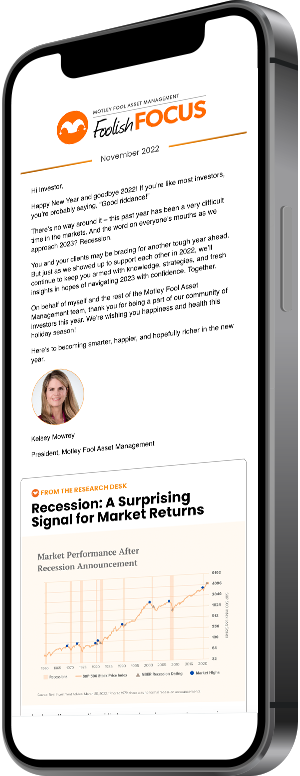
Subscribe to our newsletter, Foolish Focus, to get our latest insights on the market, as well as important updates on Motley Fool Asset Management ETFs.